
Pinellas County Previous Resident Sources
Different sources cover different years and relationships to one Pinellas County address. Begin with the newest parcel record, then move backward. The table distinguishes owners from occupants and shows where an online search must give way to a counter, library, archive, or manual index.
| Source | Years It Covers | Where Held | What It Shows |
|---|---|---|---|
| Clerk Acclaim Official Records | 1957 to present | Online and Clerk Official Records rooms | Deeds, parties, legal description, images, liens |
| Earlier deed books and indexes | Before 1957 | Clerk counter and microfilm; pre-1912 trails may be in Hillsborough | Manual grantor and grantee chain |
| Local directories | Verified local years include 1900, 1908, 1912, 1914, 1918, and an index through 1920 | Pinellas Genealogy Society and library collections | Named residents, occupations, spouses, address entries |
| Federal census | Public schedules through 1950 | NARA and library genealogy services | Household members, ages, relations, street and number when recorded |
| Permits and maps | Coverage varies by city and source | County Access Portal, municipalities, local history collections | Building work, dates, footprint, address continuity |
For a recent transfer, use the parcel's last deed and sales history. For a mid-century household, pair deed and directory evidence. For an early address, use directory, census, plat, map, and manual deed books. Exact Sanborn sheet years differ by municipality and were not established as a complete county run, so verify each catalog item before citing it.
Start Pinellas County Resident History
Search the Property Appraiser by address and record the parcel ID, site address, owner, owner mailing address, legal description, plat book and page, and last deed. Open Sales History, but treat each row as a lead until the recorded instrument confirms it. A mailing address shows where the tax notice goes, while the situs address identifies the property itself.
The legal description is the stable key. It can connect records even when a street was assigned later, renamed, renumbered, or moved between local custodians through annexation. Homestead status may suggest owner occupancy, but timing, trusts, exemptions, and redactions keep it from proving that a person lived there.
Trace Pinellas County Previous Owners
The Pinellas County Clerk's Official Records index has online coverage from 1957 forward. Search modes include name, instrument number, document type, record date, consideration, book/page, case number, and legal description. A deed identifies the grantor and grantee, recording details, and the land conveyed. Compare the legal description at every step to avoid following a same-name owner onto another parcel.
- Copy the present owner, parcel ID, legal description, and last deed from the Property Appraiser.
- Open the acquisition deed and note grantor, grantee, execution and recording dates, consideration, instrument, and book/page.
- Search the seller as an earlier grantee, with dates before the current conveyance. Match the same legal description.
- Repeat one transfer at a time. Try spelling variants and use legal-description or book/page searches when names fail.
- At the 1957 online boundary, continue at a Clerk Official Records room through deed books and manual grantor/grantee indexes.
- Grantor and grantee
- The grantor transfers an interest; the grantee receives it.
- Chain of title
- The linked sequence of recorded transfers for the same land.
- Legal description
- The land description in the deed, often more stable than a postal street number.
The Clerk's recorded deed access information shows the official online and copy route.
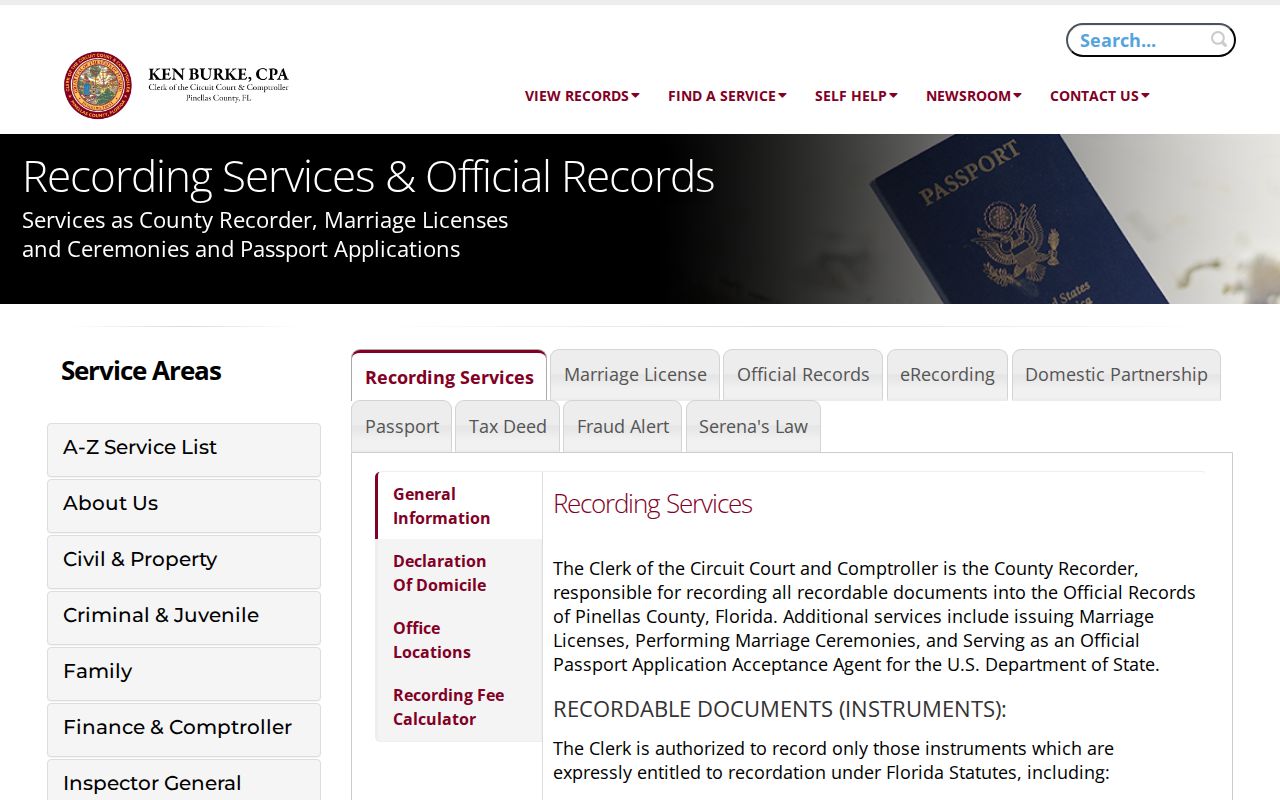
The captured page helps distinguish the Clerk's recording service from the Property Appraiser sales display used to begin the chain.
Previous Residents Before Pinellas County
Pinellas County began operating on January 1, 1912 after separation from western Hillsborough County. County-specific deed, probate, marriage, and court series begin with that new jurisdiction. A prior resident's record may therefore remain indexed under Hillsborough County even though the land is now in Pinellas.
Carry the legal description, plat, names, and approximate dates across the boundary. Early local directories for 1900 and 1908 also predate the county. Do not force modern county labels onto their place headings. This jurisdiction seam is more important than whether a modern portal returns no result.
Bridge Pinellas County Previous Addresses
No single official county source provides a complete dated concordance of renamed or renumbered streets. When an old number fails, test Property Appraiser abbreviations, local Martin Luther King street forms, and documented road wording. Then switch from text to parcel ID, plat book/page, and legal description.
Old maps, Sanborn fire-insurance sheets, plats, directories, permits, and newspaper notices can form a crosswalk. Annexation may change the office holding permits while the mailing city remains the same. Use the county My Neighborhood tool and parcel jurisdiction to identify the current custodian, then ask the relevant municipal engineering or records office for older naming material.
Date a Pinellas County Building
A resident date and a structure date are not the same. Property Appraiser building data and sales history provide leads. County Accela records can show project number, work type, status, reviews, inspections, and dates. The search defaults to two years, so older research requires a wider start date. Municipal systems must be checked when the parcel is outside county BDRS service.
Sanborn maps can show footprints, materials, additions, and prior numbering for parts of St. Petersburg, Clearwater, and other communities. The verified research did not establish every local sheet year. Check the item-level catalog and pair the sheet with permits and deeds before assigning a construction or occupancy date.
Pinellas County Previous Resident Archives
Heritage Village is a county history gateway for documents, photographs, artifacts, newspapers, and place context. Its archives began in 1961 as part of the Pinellas County Historical Museum, and Heritage Village opened to the public in 1976. The research collection now includes thousands of books and photographs and more than 20,000 artifacts.
The Heritage Village local history page is the manifest source for this archive view.
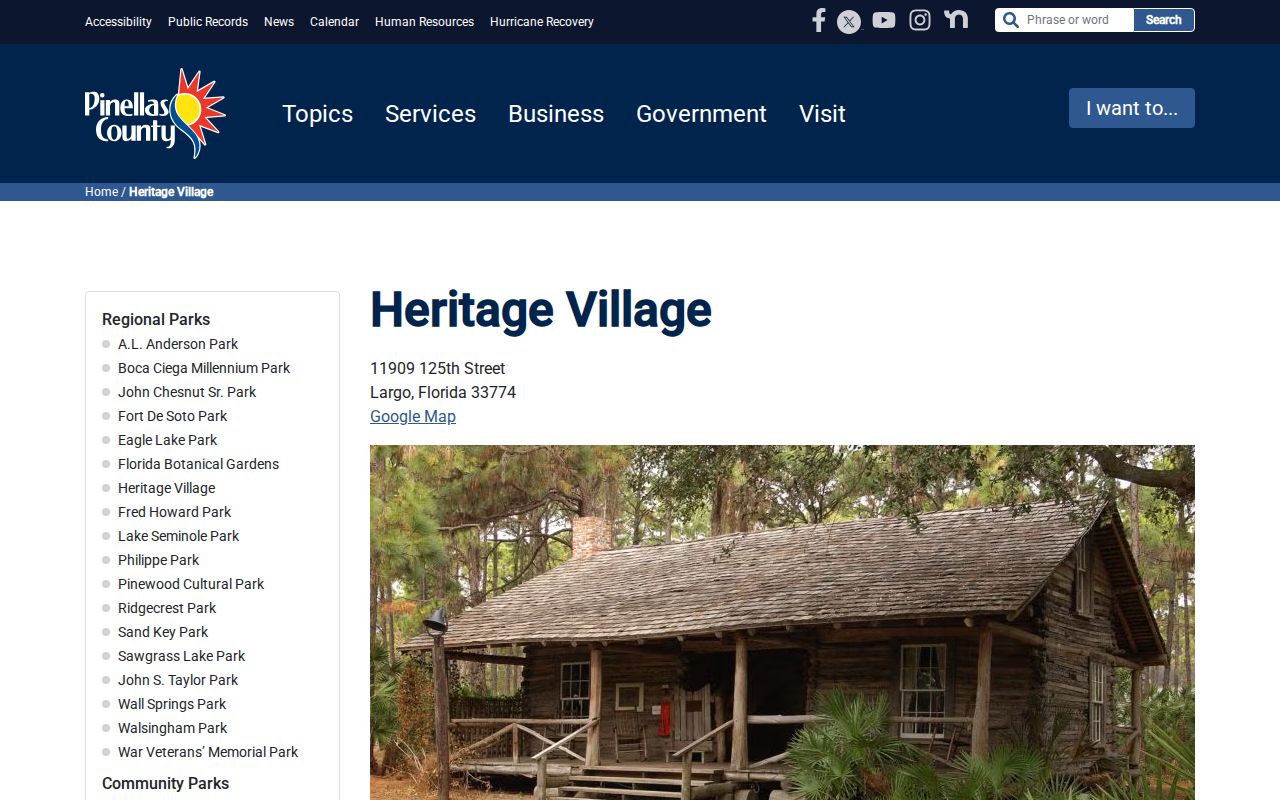
Photographs and newspaper collections can put a property or former resident in local context when official indexes supply only names and dates.
Close a Pinellas County Resident Trail
Probate, obituary, and deed records can connect a former resident to heirs or explain a transfer after death. Begin with the Clerk's probate case index, then compare names and property descriptions with the deed. An obituary can add relatives, former towns, service groups, and dates, but same-name entries need independent confirmation.
The St. Petersburg Library System maintains an obituary index, while the Pinellas Genealogy Society offers a research service that searches local cemetery indexes, newspaper obituaries, death and marriage indexes, census indexes, county histories, and surname files. Its basic research fee is $10 per name and requests need known names, event details, desired records, and contact information.
The St. Petersburg obituary index shows the local search route captured for former-resident work.
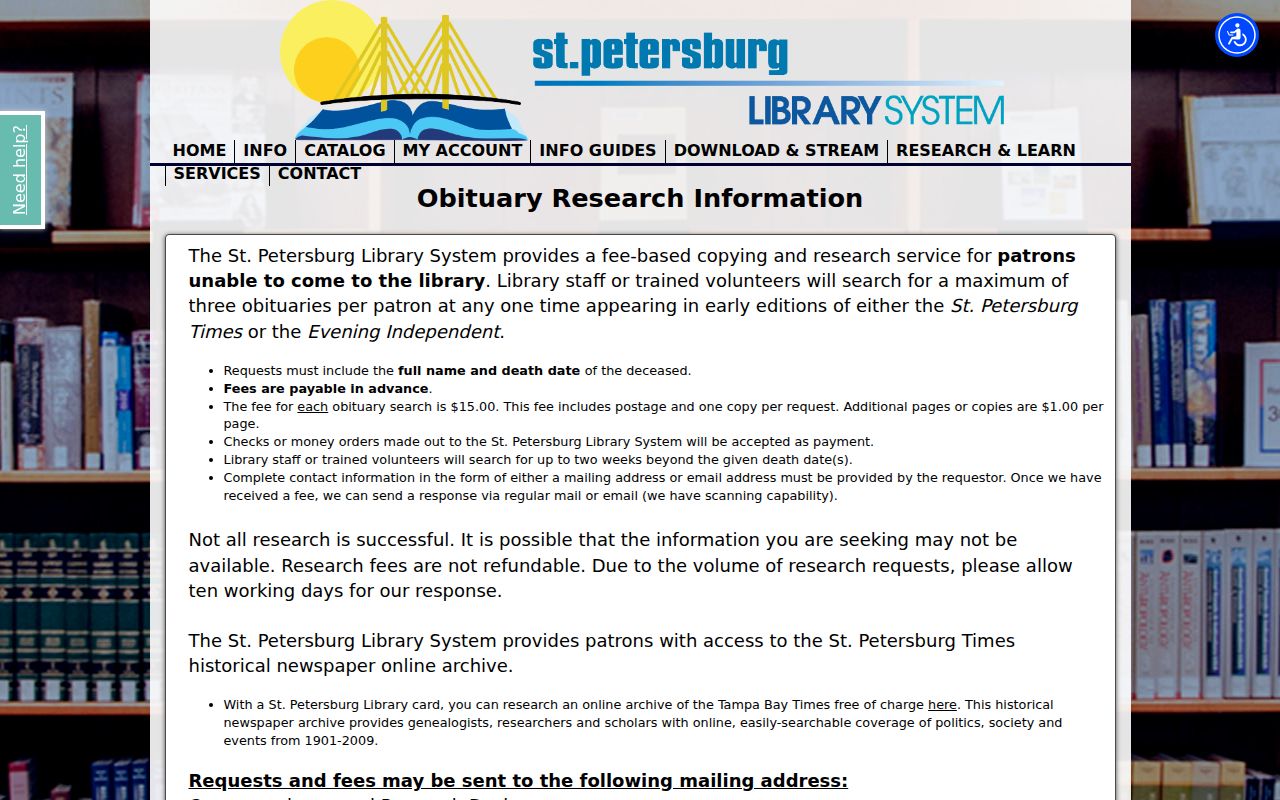
Use each obituary as a finding aid, then confirm the identity through probate, death, directory, census, or deed records.
Pinellas County Previous Resident Households
Owners are only one layer. Address-first directories can identify a listed occupant between census years, while a census schedule may show the household, ages, relationships, and street number recorded by the enumerator. The verified Pinellas Genealogy Society material includes St. Petersburg directories and census-directory work, a multi-city 1912 volume, Clearwater material, and an index through 1920.
- Find the address in the closest directory year and copy the entry exactly, including abbreviations.
- Choose the nearest public census schedule and locate the street or enumeration district.
- Compare household names, ages, relations, occupations, and neighbors instead of relying on one spelling.
- Check the next directory year to estimate a move window, then test deeds, probate, permits, and obituaries within it.
A criss-cross directory is organized by address rather than only by surname. An enumeration district is the area assigned to one census taker. Both tools depend on the address language used in their own era. The Pinellas County directory book page covers the collections themselves; this backward trail uses them to date one household.
Lawful use. Research Pinellas County previous residents for house history, family history, heirs, or personal curiosity. Never use an address trail to track, threaten, harass, or harm a living person.